
Reflections on Building AI for Real Estate Legal
On data moats, visual reasoning, and shipping in a trust-heavy domain

February 2, 2026
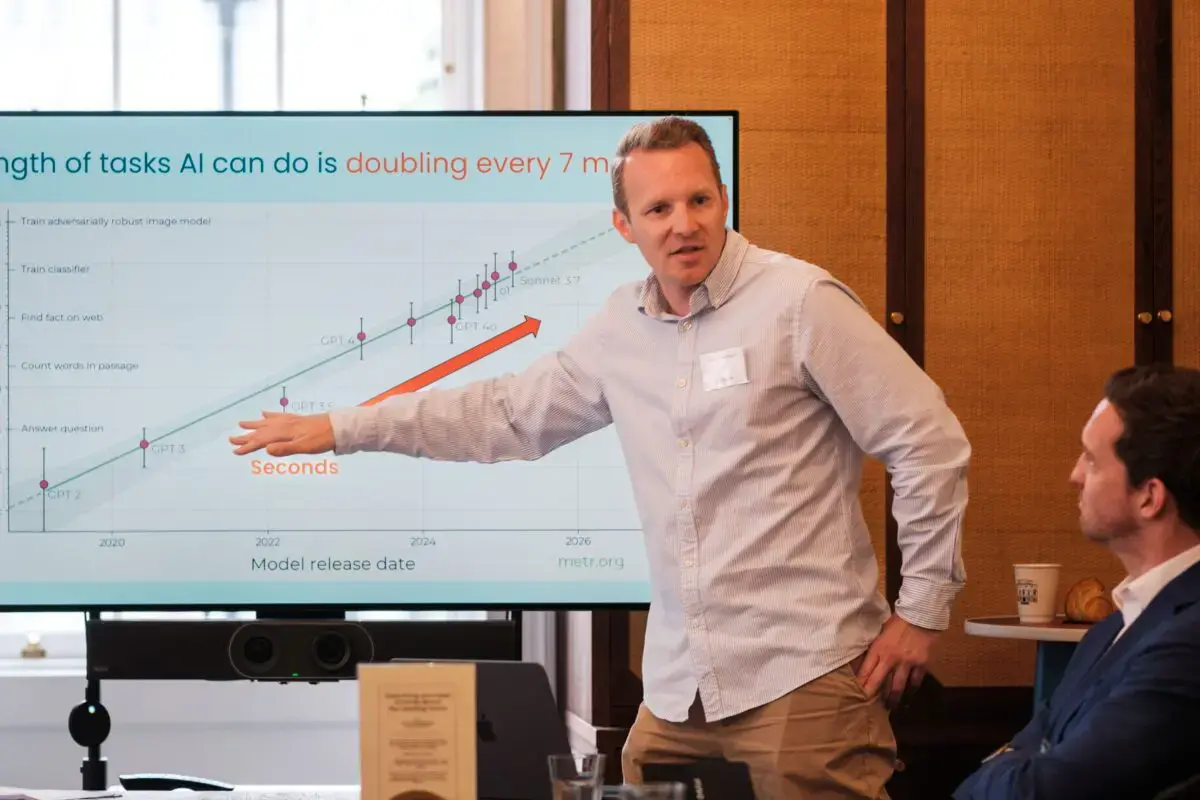
Following our $60M Series B announcement, I had the opportunity to speak with George Hannah at Best Practice AI and Sanchit Dhote at Outward VC about what we’ve built and where we’re headed. Here are some of the key themes from those conversations.
The Domain and Data Problem
There’s a common narrative that LLMs levelled the playing field—that anyone can now build smart tools on top of foundation models. But that’s not the full picture.
LLMs reset the natural language playing field, but they didn’t reset the domain and data problem.
Real estate legal is unusually messy because the “truth” lives across text and visuals—title plans, maps, surveys, deed plans—often in very old scanned documents. Before LLMs were useful, we had to get good at OCR and structuring these documents. Not just extracting text, but preserving layout, tables, signatures, and embedded images so downstream systems can reason over them accurately. That pipeline and corpus is still a real moat.
Visual Reasoning: Where LLMs Still Fall Short
The big unlock with modern AI hasn’t been simple question-and-answer—it’s agentic systems where an LLM is in a loop, equipped with specialised tools that it can use on-the-fly to solve problems.
But visual reasoning remains a key differentiator. Current vision-language models still don’t reason over boundaries and plans like a property lawyer. So we combine LLMs with more classical vision and geometry approaches that we’ve built over years and continue to invest heavily in.
This is exactly what Andrei Vasilcoi describes in his post on Teaching AI to Read Property Boundaries—how we’ve built computational geometry systems that parse historical property descriptions using a combination of AI agents and deterministic algorithms. Real-world legal descriptions mix PLSS references with metes and bounds instructions, creating geometric puzzles that require unions, differences, and spatial reasoning that LLMs alone cannot reliably perform.
Ship Early and Often
In my conversation with Sanchit Dhote at Outward, we discussed what “ship early and often” means in practice at a company building for law firms.
I’ve seen the disconnect between product engineering and customers in the market. When product engineering gets too far from customers, you end up building the wrong thing or over-engineering solutions. No matter how smart the people making product decisions are, the market is always smarter. Until you ship, you’re just guessing.
The Shift from Classical ML to Agentic Systems
Orbital has been on a multi-year journey from classical machine learning to frontier LLMs and agentic workflows. When the newer generation of LLMs arrived, we made two big bets:
- Token costs would fall continuously and eventually make our product commercially viable
- LLMs weren’t good enough for legal reasoning, but the capability curve would keep rising
Once we truly believed this, the hard part was organisational, not technical. We’d invested a lot in classical ML infrastructure. But we believed the new approach would deliver fundamentally better outcomes, so we committed to the pivot.
Accuracy Through Speed
In legal, accuracy is not optional. But speed of improvement is also part of accuracy in practice.
A fine-tuning approach can work, but it often introduces significant lag. If a customer reports an issue, a fine-tuning cycle might take weeks or months to address it. With prompt and workflow engineering, we can often address issues in minutes or hours. That means customers see better results faster, and we learn faster too.
At Orbital, shipping early and often isn’t just a product philosophy—it’s part of how we maintain accuracy at scale.
What’s Next
We’re scaling product and engineering significantly. The hiring focus is broad: strong product managers who translate customer problems into crisp bets, software engineers comfortable with distributed systems, AI engineers who understand how to build agentic systems, and legal engineers who bridge domain expertise with product thinking.
A core part of Orbital will remain the combination of frontier AI capability and deep real estate legal expertise. Clients transacting real estate go to real estate specialists for a reason. The same idea applies here—generic tools don’t cut it for complex, domain-specific workflows.
Read the full interviews:
- Eight years in the making. This is the startup taking on real estate. — George Hannah, Best Practice AI
- In conversation with Orbital CTO Andrew Thompson — Sanchit Dhote & Šárka Sirůčková, Outward VC
We’re hiring across the board. If you’re excited about solving hard problems in a trust-heavy, high-stakes domain, check out our open positions.
Andrew Thompson
CTO
