
Our Product Engineering Mantras
The principles that guide how we build at Orbital

January 8, 2026
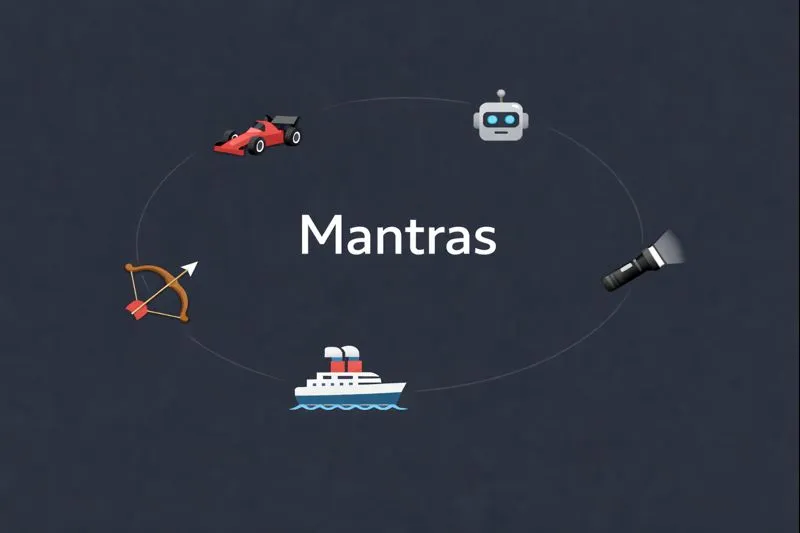
Context
As we’ve grown, we’ve found that clarity matters more than ever. Not just about what we’re building, but about how we build. Every company develops a culture over time—ours has crystallised into a set of mantras that guide our product engineering decisions.
Why mantras? Because when you’re moving fast, you need shared language. These aren’t corporate values that live on a wall and get forgotten. They’re practical heuristics we actually use in planning sessions, code reviews, product debates, and the countless small decisions that shape what we ship. They help us cut through ambiguity, make trade-offs faster, and stay aligned without endless meetings.
If you’re considering joining us, these mantras will give you a window into how we think. They reflect what we value: bias toward action, intellectual honesty, and a belief that the best teams win by staying focused on what matters most.
Ship early and often 🏎️
Small bets. Fast loops. Big wins.
True innovation doesn’t come from playing it safe—it’s born from bold bets that compound over time. You can’t predict everything, and early releases surface the unknowns faster: bugs, usability issues, unexpected feedback. The sooner you learn, the sooner you can iterate.
We believe lightweight MVPs beat over-engineered “perfect” builds. The faster we move through the build-measure-learn cycle, the faster we win.
Use this mantra when you need to push past the fear of shipping something imperfect but valuable, or when you’re tempted to keep polishing instead of getting real feedback.
But don’t use it to skip understanding the problem, to ship something that’s genuinely broken, or as an excuse to avoid accountability for quality.
The principle: Good enough today will carry us further than perfect plans ever could.
Bet on the model 🤖
Build for where it’s going, not where it is.
We’re living through the most significant technology shift of our generation. AI models are improving at a pace that’s hard to overstate—every few months brings leaps in capability and drops in cost. Our products should benefit from that acceleration, not be threatened by it.
This means staying just ahead of the curve: understanding where models are headed and building products that leverage those capabilities seamlessly as they arrive.
Use this mantra when making architecture decisions, evaluating build-versus-wait trade-offs, or resisting the urge to apply deterministic thinking to a probabilistic system.
But don’t use it as blind faith that “the next model” will fix any problem, or to justify shipping production features that models simply can’t handle today.
The principle: Understand and stay just ahead of the model curve, building products that leverage future model leaps seamlessly.
Ship, shipmate, self 🚢
Mission first. Team second. Yourself third.
This is about priorities. When there’s tension between what’s best for the mission, what’s best for the team, and what’s best for you personally, this ordering helps us make the right call. We’re here to deliver value to customers first. We support each other second. Personal wins follow from collective wins.
This isn’t about self-sacrifice—it’s about understanding that when the mission succeeds, everyone benefits. Great teams know this instinctively.
Use this mantra to refocus on delivering for customers before anything else, or when team dynamics threaten to distract from what matters.
But don’t use it as an excuse for decisions that unnecessarily hurt individuals, to avoid weighing trade-offs for all stakeholders, or to blindly follow customer requests without considering strategy.
The principle: We succeed together when the mission comes first, we support each other, and individual success flows from shared success.
Fight with the weapons you have 🏹
Resourcefulness beats resources.
Constraints are a given. You’ll never have unlimited time, budget, or people. The best teams don’t wait for ideal conditions—they figure out how to win with what they have while building for what’s next.
This is about owning outcomes regardless of circumstances. It’s about creative problem-solving, pragmatic prioritisation, and refusing to use resource constraints as an excuse for not delivering.
Use this mantra when resources have been set but the outcome still needs to be achieved, when deciding how to allocate what you have, or when defining outcomes that match available resources.
But don’t use it to take on a fool’s errand when the outcome is clearly unattainable, to avoid owning the quality of your work, or to turn every decision into a war metaphor.
The principle: The best teams win with what they have while building for what’s next.
Truth over tact 🔦
Name it. Fix it. Move on.
The only way to fix root causes is to name them—especially when emotions, reputation, or hierarchy make it uncomfortable. As we scale, we work with more people we don’t know well, which makes candour even more essential. We need to be able to say the hard thing so we can move fast and fix what matters.
This doesn’t mean being harsh. Truth lands best when delivered with care. But we’d rather have uncomfortable honesty than comfortable silence.
Use this mantra when there’s a problem on the table but no one is naming the real issue, when the team is circling symptoms instead of causes, or when someone needs permission to keep digging until they find the truth.
But don’t use it as an excuse to be abrasive without genuine intent to solve, to deliver sensitive feedback publicly when it should be private, or without empathy.
The principle: We are here to fix problems, not to avoid discomfort. Truth is our lever; empathy is our balance.
Join Us
These mantras aren’t just words—they shape how we work every day. If they resonate with you, if you want to solve challenging problems that matter at the intersection of AI and real estate law, we’d love to hear from you.
Andrew Thompson
CTO


